Diamond Prices
Read more


The 3 Best Diamond Grading Schools
Ajediam’s pick for the best classes around the world
Do you want to enjoy the microscopic world of diamonds with the eyes of a professional? The beauty of gemstones naturally draws many aesthetic lovers. Observing their beauty is enough for some. Others, however, may wish to make a living out of it. The diamond trade may look like a closed circle to outsiders. The prospect of starting a career within it can seem daunting. The amount of knowledge and experience that you need to acquire disheartens most people who would consider a career around gemstones.
Although the best way to learn is by doing, several diamond grading schools offer you an easier introduction to the diamond trade with professional-grade courses and programs. Apart from the knowledge and confidence, you will also receive a certificate for your skills. With the right skills and certificates, you can kick-start your career in the diamond trade. Keep in mind, that acquiring a few gemology certificates will only be the start of your learning journey.
With all this being said, this article will walk you through the most reputable diamond grading schools in the world.
The Gemological Institute of America’s diamond grading program
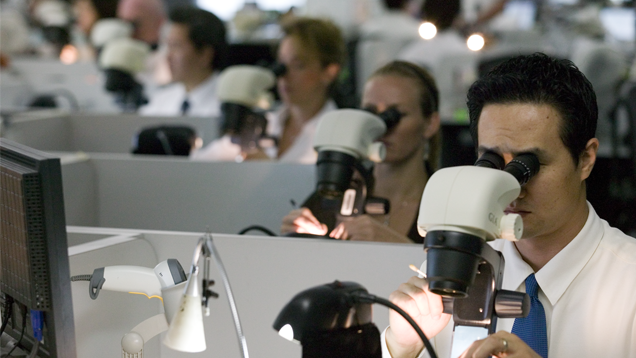
When diamond grading education is concerned, the GIA is the world’s leader, hands down. The institute was established in 1931, in Carlsbad, the U.S. For almost a century it has standardized the diamond trade and has hugely impacted the way we understand and talk about diamonds.
The GIA has been accredited by the Commission of Schools and Colleges as an educational institution. Their diplomas and certifications are the most respected in the world today. However, they are neither cheap nor easy to obtain.
The GIA has an abundance of courses, programs, and online materials for any would-be gemologist. If you want to get the full merits out of a GIA education, you should complete one of their diploma programs. Currently, their diploma programs include applied jewelry professional, graduate in colored stones, graduate in diamonds, graduate gemologist, graduate jeweler, graduate pearls, and jewelry design and technology programs.
The Graduate Diamond program offers hands-on experience with the GIA International Diamond Grading System based on the 4Cs. Students will learn how color, clarity, cut, and carat weight affect the value of diamonds. Students will learn to grade diamonds based on the D-to-Z scale and distinguish lab-grown diamonds, treatments, and stimulants from natural diamonds. Students also learn when advanced testing is necessary, using specialized lab equipment. Apart from grading, students also learn about the market supply and demand factors that affect the prices of diamonds.
The Graduate Diamond program is available on location in one of the GIA campuses in Bangkok, Carlsbad, New York, Hong Kong, Seoul, Taipei, and Mumbai. The program is also suited for distance learning, with various online learning classes, combined with hands-on lab classes. The on-campus mode is a full-time study program, while the distance mode follows a more leisurely pace. The possible career paths that the course opens up include diamond buying, sorting, grading, retailing, wholesaling, and even specializing in auction house jewelry.
The Gemmological Association of Great Britain’s diamond grading program

The Gemmological Association of Great Britain or Gem-A is the world’s oldest diamond educational institution. It was established in 1908 with the start of the Gemmological Committee in Great Britain. They were the first who set the standards for modern gemology classes. Their most famous student, Robert Shipley, went on to establish the GIA. Other graduates of Gem-A are in leading positions among international gemstone organizations.
Today Gem-A is a prestigious institution with educational authority that is recognized all over the world. The association offers a combination of workshops, short courses, online materials, and two tracks of graduate courses. The first track concerns gemology, and the second one focuses specifically on diamonds.
Completing each of the two tracks takes between 4 and 9 months of teaching depending on the method of instruction. Students may study in person at one of the international Gem-A accredited teaching centers or they can study online.
Currently, there are teaching centers in Bahrain, China, France, Greece, India, Italy, Japan, Madagascar, Myanmar, the Netherlands, Singapore, Sri Lanka, Sweden, Thailand, the UK, and the U.S. Classes are available in English, French, Japanese, and Simplified Chinese.
Gem-A’s Diamond Diploma is suitable for all skill levels. Beginners, business leaders, auctioneers, and scientists can all gain valuable insights. The course can be followed in person and online. The qualification received at the end of the study is Gem-A Level 5 Diploma in Gem Diamond (Ofqual level 5). The course fees start at 3300 pounds sterling.
During the course, students learn to recognize and describe the chemical structure of a diamond and understand how it affects its physical and optical properties. Students learn to distinguish between natural, treated, and synthetic diamonds, as well as diamond stimulants. Students will be able to make observations of rough diamond crystals and reliably communicate them using the Four Cs to estimate a diamond’s value.
Students also become acquainted with the intricacies of the diamond supply chain from mine to market. Students also receive training on diamond grading, testing, and cutting. Lastly, they are also taught about diamond ethics and traceability.
After completing the diamond track, graduates are eligible to apply for membership within Gem-A, as well as becoming a fellow or a diamond member (FGA and DGA) of the gemological association. They can also continue their studies in gemology foundation and diploma. If they complete both tracks they become eligible to study for a BSc in Gemology & Jewelry Design.
The Hoge Raad voor Diamant diamond grading program

The Hoge Raad voor Diamant (HRD) or the High Council for Diamonds was established in 1973, in Antwerp, Belgium. It was created as a subsidiary of the Antwerp World Diamond Center at the request of the Belgian government. The HRD has a globally recognized laboratory that is renowned for its training programs for diamonds, manufacturing lab equipment, and academic research. HRD Antwerp is represented in China, Hong Kong, Turkey, India, and the Middle East.
As an educational institution, HRD Antwerp has more than forty years of education. Its international courses have paved the careers of many diamond graders, sorters, and gemmologists all over the world. The HRD has specialized hands-on courses for rough diamonds, polished diamonds, and diamond jewelry design.
During the course on rough diamonds, students learn how to weigh, count, sieve, list, and store rough diamonds. They learn about diamond morphology, geology, and mining. They learn the intricacies of the rough-to-polished conversion process and the different techniques involved. Education is practically orientated and includes a visit to a real diamond polishing factory.
The course on rough diamond appraisal is available in English, French, and Portuguese. It lasts for two weeks and must be taken in person in Antwerp. The course is suitable for people who wish to learn about rough diamond sorting, manufacturing, trading, and appraising. The course has a current price tag of 2662 euros.
HRD Antwerp truly excels in its polished diamond courses. They offer an exhaustive course on diamond grading. It takes students through the basics of the Four Cs and quickly builds upon them. Students learn to determine the quality of a stone and set a price for it. They learn to detect the most common simulants and will get hands-on experience working with a microscope and other lab equipment.
Students are taught to correctly clean and examine diamonds from different angles. They learn about the principles of weighing and calculating carat weight. They learn to identify both internal and external characteristics of diamonds vis-a-vis treated stones and simulants. They learn to grade diamond colors and clarity by comparing them with master stones.
HRD particularly excels at teaching students how to grade the cut of diamonds. They learn about proportions, symmetry, polish, and measuring dimensions with a caliper. They compare all the numbers to tables with proportions and symmetry. The study also includes fancy cuts and not just round brilliant cuts like most other courses.
The HRD diamond grading course is available in English, French, Greek, Italian, and Spanish. Study locations include Antwerp, Thessaloniki, Barcelona, Madrid, Milano, Bari, and Napoli. The course lasts up to four weeks, costs 3327 euros, and ends with an HRD Antwerp Diploma for a Certified Diamond Grader.
We hope you enjoyed the read!
Hopefully, you found this article interesting and useful. Starting a career in the diamond trade can seem daunting, but is a rewarding experience. In this article, we talked about the three most famous institutions in the world that offer diamond grading courses. Whichever you choose, know that the best school is always on the ground. Recognizing trends, correctly pricing, and selling diamonds can be like driving a car – you need practice to learn. If you need a reference for price lists you can check out the Ajediam price list.